Industrie
The Transformation of the Italian Steel Industry: Between the Shutdown of Blast Furnaces and the Path Toward Truly Sustainable Steel
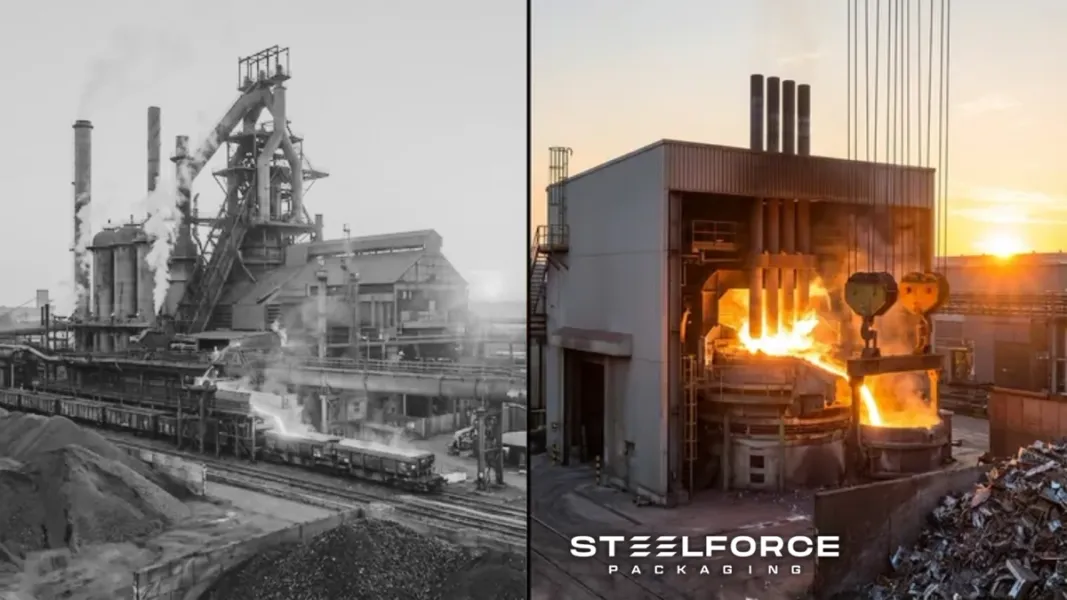
The Transformation of the Italian Steel Industry: Between the Shutdown of Blast Furnaces and the Path Toward Truly Sustainable Steel
The steel industry is experiencing one of the most pivotal moments in its history. Amid regulatory pressure, rising environmental costs, and the urgent need to decarbonize production processes, Europe is moving toward cleaner and more efficient models. In this context, Italy faces a structural challenge that brings the need for deep change back onto the agenda.
The Expert Insight of Carlo Mapelli: An Industry at a Turning Point
Professor Carlo Mapelli, one of the most respected voices in metallurgy and former board member of Acciaierie d’Italia Holding, was unequivocal in a recent analysis: the Taranto blast furnaces should be shut down. His central argument is clear: maintaining coal-based production is no longer technically or environmentally viable.
According to Mapelli, the current framework presents three fundamental problems:
Environmental and safety issues
Traditional blast furnaces pose significant risks and generate a carbon footprint incompatible with European climate goals.
Lack of economic sustainability
Modernization requires multi‑billion‑euro investments that no private company can shoulder alone.
An inevitable technological transition
The only viable path to achieving decarbonization targets is shifting toward electric steelmaking technologies and hydrogen‑based processes. But this transition demands a coordinated national plan, not isolated efforts.
Mapelli summarizes the challenge succinctly:
“This is not only about technology, but about guaranteeing a sustainable industrial model. The sector needs government intervention and a shared strategy between institutions and companies.”
Key Takeaways From the Italian Situation
- Shutting down the Taranto blast furnaces is both inevitable and necessary.
- The scale of the required investments is too large for the private sector alone.
- The green transition will only be achievable with public support and a unified roadmap.
- Italy urgently needs a national steel strategy aligned with decarbonization.
ERG’s Momentum: Accelerating Toward a Renewable Future
While the steel sector reflects on its transformation, the Italian energy sector continues to advance. ERG recently reported remarkable results:
- €558 million in revenue
- Year‑over‑year growth
- Wind and solar production doubled
- Full‑year guidance confirmed
ERG’s strategy reinforces a clear trend: the energy transition is no longer optional, but a solid and profitable path forward. Its strong commitment to renewables demonstrates that sustainability can coexist with economic growth.
ENFINITY™: When Circularity Stops Being a Concept and Becomes Real‑World Production
Source: Steelforce Packaging
After laying out the sector’s challenges and opportunities, it is impossible not to connect this analysis with a project that shows how innovation can redefine the future of steel: ENFINITY™, the new initiative by Steelforce Packaging.
This initiative introduces the first scalable model of low‑emission steel produced from post‑consumer packaging scrap.
What Makes ENFINITY™ Different?
1. Full Circularity
It uses 100% recycled cans as its primary raw material.
2. Cleaner Technology
The process replaces traditional blast furnaces with Electric Arc Furnace (EAF) technology and advanced de‑tinning and remelting steps, completely eliminating the use of coal.
3. Verified 90% Reduction in CO₂ Emissions
Carbon intensity per ton drops from 2.5 tonnes of CO₂ to just 250 kg.
4. Compatibility With Existing Canmaking Lines
It ensures quality, strength, and reliability without requiring changes to current manufacturing equipment.
5. Scalability and Transparency
The project sets a new benchmark for “clean steel,” with a traceable, verifiable, and globally adaptable supply chain.
A Message for the Industry
The insights from Mapelli, the momentum of the energy sector, and pioneering projects like ENFINITY™ all converge toward the same conclusion:
The future of steel will not be built in blast furnaces, but through circularity, electrification, and collaboration between companies and institutions.
Italy and the world must accelerate this transition. The good news is that the technology, expertise, and models already exist. The challenge now is to scale, invest, and dare to transform.